EN
EN
Commercial Efficiency: Why Resorts and Parks Prioritize Water Bike Rentals
Two-seater water bikes maximize revenue per dock space and staff hour
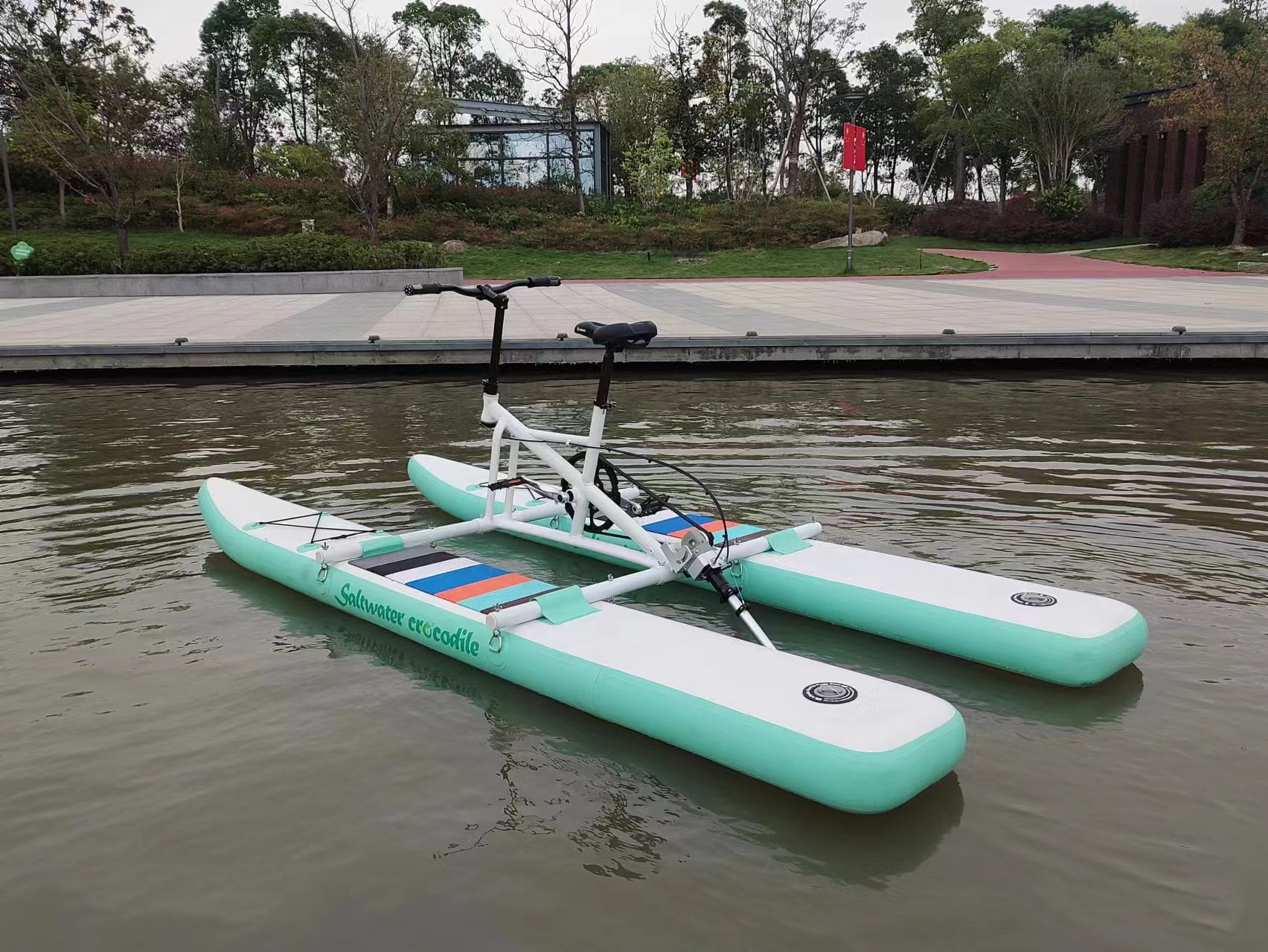
Water bikes deliver superior spatial and labor efficiency compared to single-person watercraft. A two-seater unit occupies roughly the same dock footprint as a kayak—but generates double the rental revenue potential per slot. This density advantage directly increases per-square-foot earnings for operators. Their intuitive, bicycle-based operation also slashes onboarding time: staff report training new users in under five minutes, versus 15+ minutes for paddleboards or kayaks. Faster turnover enables more daily rentals per staff hour—turning labor hours into scalable revenue units.
Low maintenance, high durability, and rapid turnover drive operator ROI
Mechanical simplicity translates to exceptional operational economics. Water bikes use sealed pedal-drive systems with far fewer wear points than combustion engines or even inflatable paddlecraft. Leading rental operators report maintenance costs 60% lower than paddleboards and 80% below motorized alternatives. That durability supports near-continuous peak-season use—critical for seasonal ROI. Average sessions last 45–75 minutes (versus 2+ hours for kayaks), enabling 3–5 bookings per unit per day. Combined with minimal upkeep, this model delivers 28% higher net margins than traditional watercraft rentals, according to industry benchmarks from the National Recreation and Park Association (NRPA) and the International Association of Amusement Parks and Attractions (IAAPA).
Inclusive Appeal: Safety, Accessibility, and Fitness Benefits Driving Guest Demand
Water bikes lower barriers to entry for non-swimmers, families, and older adults
Water bikes democratize waterfront recreation by replacing skill-dependent paddling with familiar cycling mechanics. No swimming ability, core strength, or prior experience is required—making them uniquely accessible to non-swimmers, children riding with adults, and older guests seeking low-impact activity. The seated, stable position reduces fatigue and anxiety, while pedaling intensity remains fully adjustable—from relaxed sightseeing to light cardio. This inclusivity expands the addressable guest pool for operators, capturing demographics often excluded from traditional water sports. Reduced instruction time further accelerates guest throughput without compromising safety or experience quality.
Comparative safety and stability advantages over kayaks and paddleboards
Water bikes offer inherent stability unmatched by single-hull kayaks or stand-up paddleboards (SUPs). Their catamaran-style dual-pontoon design eliminates capsizing risk during normal use, while the seated posture maintains a consistently low center of gravity—unlike SUPs, where balance is dynamic and precarious. Integrated handrails provide secure grip points beyond what paddle handles alone offer. For operators, this translates to measurably lower liability exposure, reduced insurance premiums, and stronger guest confidence—especially among older adults or those with mobility considerations. As noted in the U.S. Consumer Product Safety Commission’s 2023 Recreational Watercraft Injury Report, pedal-powered craft account for less than 2% of reported water-sport injuries despite growing adoption—underscoring their safety profile.
Premium Integration: Water Bikes as High-Value Add-Ons in Luxury Tourism
Boosting per-guest spend in yacht charters and boutique resort packages
Luxury yacht charters and boutique resorts leverage water bikes as high-perceived-value enhancements—not just add-ons. Silent, emission-free, and effortlessly stylish, they complement premium experiences like sunset cruises or guided snorkel tours without demanding physical exertion or technical skill. Operators routinely command a 20–30% price premium over standard kayak rentals when bundling water bikes into curated packages. Their photogenic silhouette boosts social media engagement—a strategic asset for properties relying on organic guest content. With typical sessions lasting 45–60 minutes, staff can schedule multiple rentals per day without disrupting service flow. Guests perceive these offerings as distinctive, must-try amenities—elevating perceived brand value while increasing average transaction size.
Sustainability and Regulatory Alignment: The Hidden Advantage of Water Bikes
Water bikes align seamlessly with evolving environmental standards and regulatory expectations for waterfront operations. As zero-emission, silent watercraft, they eliminate fuel storage, exhaust permitting, and spill liability—key pain points for motorized rentals. Their quiet operation complies with noise ordinances in ecologically sensitive zones, including marine protected areas and wildlife reserves, where motorized vessels face increasing restrictions. Municipalities and park authorities—including the National Park Service and California Coastal Commission—are increasingly prioritizing low-impact recreation through expedited permitting and reduced fee structures for human-powered equipment. By meeting ESG commitments without operational trade-offs, water bikes support both environmental stewardship and long-term licensing stability—making them a strategically resilient investment for forward-looking resorts and parks.
FAQ
Why are water bikes preferred by resorts and parks?
Water bikes offer enhanced revenue efficiency, low maintenance costs, and wide guest accessibility, making them a profitable and inclusive choice for rental operations.
What makes water bikes more stable than kayaks or paddleboards?
Their catamaran-style dual-pontoon design provides superior stability, virtually eliminating capsizing risks and ensuring guest safety, even for non-swimmers or older adults.
Are water bikes environmentally friendly?
Yes, water bikes are zero-emission and silent, making them ideal for ecologically sensitive areas and compliant with environmental regulations.
How do water bikes support luxury tourism?
Water bikes are premium, stylish, and eco-friendly, making them an attractive offer for luxury yacht charters and boutique resorts, often commanding higher rental rates.
What are the key financial benefits of renting water bikes?
Operators benefit from higher revenue per dock space, lower maintenance costs, quicker guest turnover, and improved net margins compared to traditional watercraft rentals.
Table of Contents
- Commercial Efficiency: Why Resorts and Parks Prioritize Water Bike Rentals
- Inclusive Appeal: Safety, Accessibility, and Fitness Benefits Driving Guest Demand
- Premium Integration: Water Bikes as High-Value Add-Ons in Luxury Tourism
- Sustainability and Regulatory Alignment: The Hidden Advantage of Water Bikes
- FAQ