EN
EN


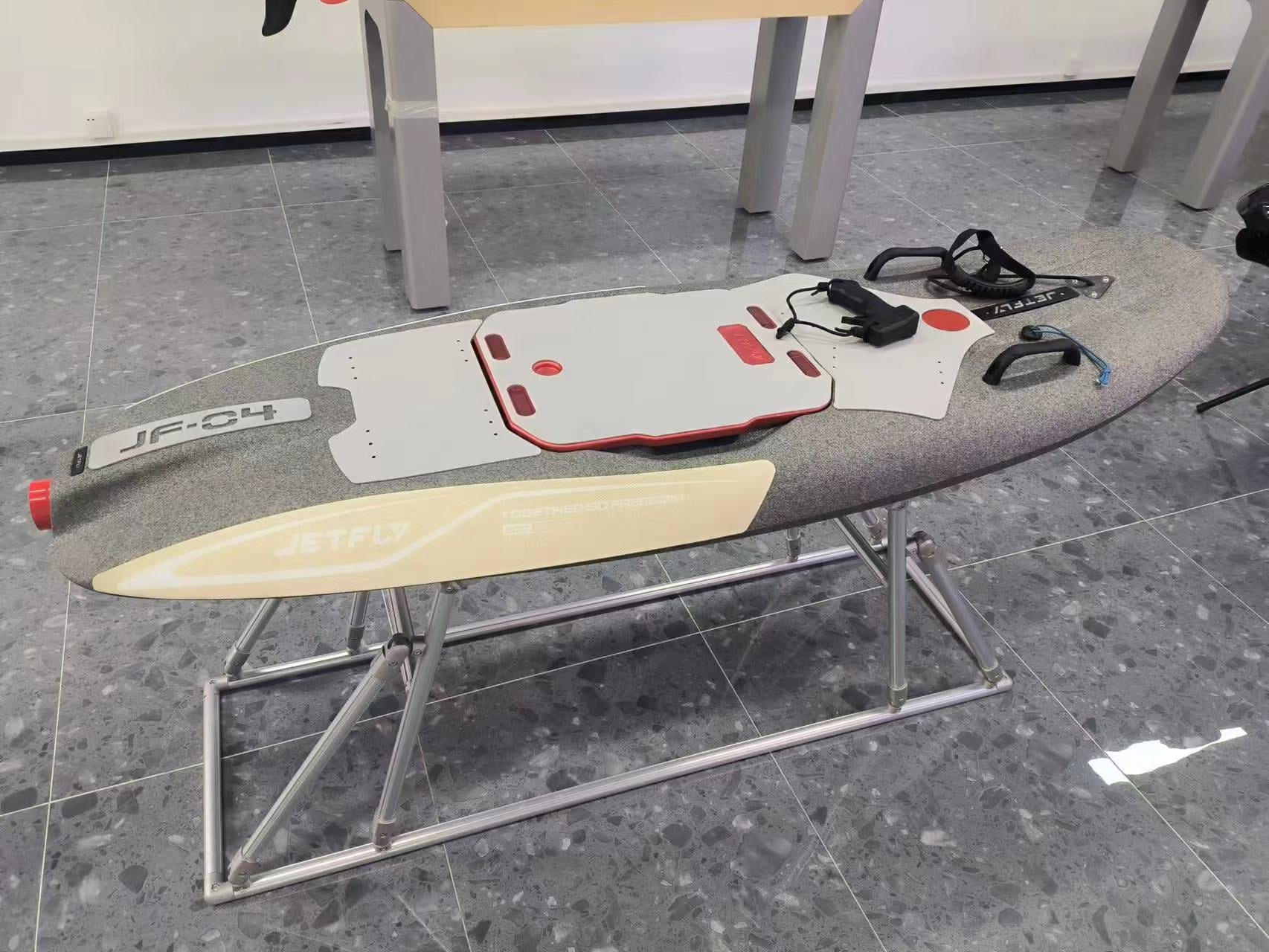
Selecting the Right Motorized Surfboard for Your Skill Level
Matching Power Output, Weight Capacity, and Stability Features to Beginner, Intermediate, or Advanced Riders
Choosing the right motorized surfboard begins with an honest assessment of your riding ability. Beginners need forgiving, stable platforms that build confidence: wider, thicker boards with ample volume, soft rails, and larger surface area resist tipping and let you focus on balance. Speed should be moderate—15–20 mph—with motors tuned for smooth, gradual acceleration rather than abrupt surges. Weight capacity is critical: select a board rated at least 20–30% above your body weight to ensure buoyancy and predictable handling. For example, a 200-lb rider benefits significantly from a board rated for 265 lbs—not just 220 lbs—delivering better responsiveness and planing efficiency.
Intermediate riders can trade some stability for agility. Slightly narrower profiles, increased power (5–8 kW), and speeds up to 25 mph support carving and refined edge control. Weight capacity should still include a 10–15% safety margin to preserve maneuverability without compromising safety. Advanced users—experienced in high-speed water sports—seek boards with motors exceeding 10 kW and top speeds beyond 30 mph. These hulls are streamlined, highly responsive to subtle weight shifts, and often feature multi-fin setups for precise, razor-sharp turns. At this level, weight capacity aligns closely with rider mass, as excess board volume dampens acceleration and turn-in responsiveness. Matching power curve, weight limits, and inherent stability to your skill stage is the most reliable path to progression—and far fewer swims back to shore.
Electric vs. Gas-Powered Motorized Surfboard: Performance, Maintenance, and Regulatory Considerations
Electric motorized surfboards dominate the entry-level and eco-conscious market. Lithium-ion batteries deliver silent operation, near-zero maintenance, and push-button start-up. Runtime typically ranges from 30–60 minutes—sufficient for focused sessions—while torque peaks instantly at zero RPM, offering smooth, predictable acceleration. Charging takes 1.5–2.5 hours, and electric models are permitted on most freshwater lakes where noise and emissions restrictions apply.
Gas-powered boards use small two- or four-stroke engines and deliver raw, sustained speed—often exceeding 35 mph—with longer ride times per fuel fill. However, they require fuel mixing, regular carburetor cleaning, and safe storage of flammable liquids. Noise levels are substantially higher, and many public waterways—including numerous state parks and coastal zones—prohibit two-stroke engines outright. Before purchasing, always verify local regulations: an increasing number of jurisdictions restrict or ban gasoline-propelled watercraft under specific size or emission thresholds. Given their simplicity, regulatory flexibility, and lower barrier to entry, electric boards remain the default recommendation for beginners; experienced riders pursuing maximum speed and endurance often choose gas—but only where legally and environmentally permissible.
Mastering Core Riding Techniques for Motorized Surfboard Control
Optimal Body Positioning: Stance Geometry, Knee Flex, and Center-of-Mass Alignment
Control starts with stance. Place feet shoulder-width apart, back foot slightly angled for lateral stability. Keep knees softly bent—acting as natural suspension—to absorb chop and maintain hull contact with the water. Align your center of mass directly over the board’s midpoint; a slight forward lean shifts weight onto the front foot, helping the hull plane cleanly at speed. Avoid locking joints—micro-adjustments in knee flex prevent porpoising and maintain dynamic balance. Position hips and shoulders parallel to the board to create a stable, responsive platform. This neutral, athletic posture forms the foundation for every maneuver, from relaxed cruising to aggressive carving.
Dynamic Weight Transfer for Acceleration, Deceleration, and Carved Turns
Once balanced, weight becomes your primary steering tool. To accelerate smoothly, press down through your front foot while gently increasing throttle—this lowers the nose and reduces drag. For deceleration, shift weight rearward to settle the tail and scrub speed naturally. Carved turns rely on coordinated movement: lean into the turn while pressing the inside rail down with toes or heels. A forward bias tightens the arc; a centered stance widens it. Link turns by rolling progressively from edge to edge—abrupt movements disrupt flow, while gradual pressure yields clean, controlled arcs. Mastery of these subtle transfers unlocks precise, effortless control across variable water conditions.
Essential Safety Protocols and Environmental Readiness Checks
Mandatory Safety Gear: Impact Vest, Helmet, and Propulsion System Guards for Motorized Surfboard Use
Motorized surfboarding introduces impact forces well beyond traditional surfing—making specialized protective gear non-negotiable. An ISO 12402-5–certified impact vest distributes collision energy across the torso and maintains buoyancy, reducing thoracic injury risk by 62% in powered watercraft incidents (Marine Safety Institute, 2023). A water-sports helmet meeting EN 1385 standards protects against blunt trauma during falls onto water or submerged objects, lowering cranial acceleration peaks by 45% in cadaver-based testing. Propulsion system guards—rigid, debris-deflecting shrouds around jet intakes—prevent entrapment of hair or neoprene, a hazard cited in 23% of early e-foil injury reports (Journal of Watercraft Medicine, 2022). Inspect all gear before each session for strap integrity and fastener corrosion; saltwater exposure degrades components within 90 days if neglected.
Water Conditions Assessment: Minimum Depth, Wind-Wave Interaction, and Tidal Safety Thresholds
Environmental awareness prevents the two leading causes of motorized surfboard accidents: grounding and loss of control in steep chop. Maintain a minimum depth of 1.2 meters (4 feet) to allow recovery from throttle-induced oscillation without striking the seafloor. While transducer-equipped models display real-time depth, bathymetric verification remains essential—especially near reefs or sandbars. Wind-wave interaction is equally critical: fetch-driven chop exceeds safe operational limits when sustained winds surpass 15 knots, generating 0.3-meter waves that destabilize small planing hulls (U.S. Coast Guard Advisory, 2024). Tidal safety requires calculating the local mean low-water spring range; on macro-tidal coastlines, an ebbing tide can drop depth below 1.2 meters within 40 minutes. Always cross-reference NOAA weather buoys and official tide charts—and abort riding at the first sign of whitecaps or strengthening onshore winds.
Progressive Skill Development: From First Ride to Confident Maneuvering
Proficiency accelerates fastest with a structured, incremental approach—prioritizing fundamental control before complex maneuvers. Begin in flat, waist-deep water with throttle set to low power mode, focusing solely on stable stance and gentle weight transitions to hold a straight line. Once consistent, introduce wide, sweeping turns by leaning and shifting mass toward the rail—keeping knees flexed and head aligned with the board’s centerline. Intermediate practice integrates controlled acceleration bursts and edge-based deceleration, combining handlebar input with lower-body rotation for nuanced steering. Confident maneuvering emerges through repetition: figure-eight patterns, carving arcs across mild swell, and practicing emergency throttle-release stops. Consistent, deliberate drills build the muscle memory and neuromuscular coordination required for dynamic wave riding—transforming your first ride into instinctive command.
FAQ Section
Q: What type of motorized surfboard is best for beginners?
A: Beginners should opt for wider, thicker boards with moderate speeds (15–20 mph), rated at least 20–30% above their body weight for maximum stability and buoyancy.
Q: How do electric and gas-powered motorized surfboards differ?
A: Electric boards offer silent operation, near-zero maintenance, and are eco-friendly, while gas-powered boards provide higher speeds and endurance but require more maintenance and have regulatory restrictions.
Q: What safety equipment is essential for motorized surfboarding?
A: Mandatory gear includes an impact vest (ISO 12402-5 certified), water-sports helmet (EN 1385 certified), and propulsion system guards to prevent injury during operation.
Q: How can I improve my motorized surfboarding skills?
A: Start with fundamental techniques in flat water—focus on stable stance and weight transitions, then gradually progress to controlled acceleration, carving turns, and figure-eight patterns for better maneuverability.
Q: What are the environmental considerations for motorized surfboarding?
A: Check local depth requirements (minimum 1.2 meters), wind conditions (below 15 knots), and tidal patterns to ensure safe riding in your chosen location.