EN
EN
Shallow-Water Performance: The Core Advantage of Mini Jet Boats
Jet Propulsion Enables Safe, Reliable Operation in Under 12 Inches of Water
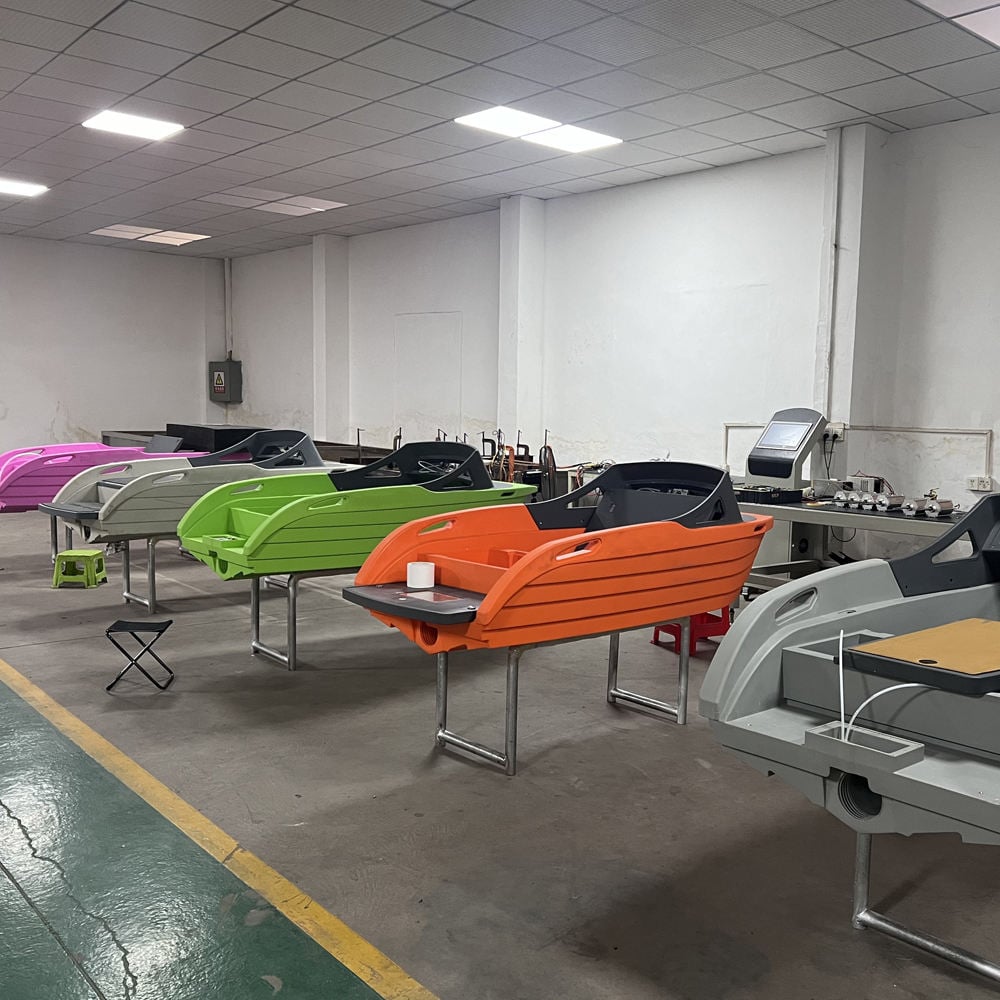
Mini jet boats draw water through a bottom-mounted intake and eject it at speed—eliminating propellers, drive shafts, and external rotating components below the hull. This design delivers a static draft of just 10–12 inches, enabling safe, repeatable operation in water as shallow as 10 inches. The recessed intake grid minimizes debris ingestion while shielding swimmers and riders from mechanical hazards. Unlike exposed-propeller craft, mini jet boats glide smoothly over submerged rails, artificial reefs, and uneven lake or pool bottoms without entanglement risk or propulsion damage. In managed water park environments, this translates to fewer bottom-gouging incidents, reduced maintenance downtime, and greater flexibility in ride path programming—across textured pool floors, gently sloped entries, and narrow splash channels that would ground or damage conventional vessels. That versatility unlocks immersive course designs: waterfalls, archways, and shallow chicanes—all while minimizing hull wear.
Mini Jet Boats vs. Traditional Propeller Craft in Variable-Depth Water Park Zones
Propeller-driven boats typically require 24–36 inches of water for safe operation—clearance needed to protect exposed gear from contact with the bottom or infrastructure. By contrast, mini jet boats operate reliably in as little as 12 inches, making them uniquely suited to water parks where deep basins transition into zero-depth splash pads. This depth tolerance directly improves guest throughput and ride availability across mixed-depth zones.
| Feature | Mini Jet Boat (Jet Drive) | Traditional Propeller Craft |
|---|---|---|
| Minimum safe depth | ~12 inches (hull draft only) | 24–36 inches (prop clearance) |
| Entanglement hazard | None (enclosed impeller) | High (exposed propeller) |
| Maneuverability | Tight turns, instant reverse bucket | Larger turning radius, slower reverse |
| Damage risk in shallows | Low: integrated intake grate prevents contact | High: prop strikes can bend shafts or shear pins |
| Operational downtime | Reduced: fewer bottom-related repairs | Higher: frequent prop and skeg damage |
Their compact, shallow-V or flat-bottom hull geometry further reduces draft while enhancing low-speed planing stability. In practice, operators safely run rides through variable-depth channels as shallow as 14 inches—depths where propeller craft risk grounding, infrastructure damage, and guest injury. The synergy of jet propulsion and purpose-built hull design makes mini jet boats the more robust, guest-safe platform for modern, mixed-depth aquatic attractions.
Design Flexibility: How Mini Jet Boats Enable Dynamic, Themed Ride Experiences
Tight-Turn Radius and Compact Hull Geometry Support Immersive Course Layouts
Mini jet boats pivot within their own length—achieving turn radii under two boat lengths—thanks to thrust vectoring from the steerable jet nozzle and optimized hull form. This agility transforms linear ride paths into narrative-driven, three-dimensional experiences. Designers can route narrow, winding channels and sharp 180-degree switchbacks through tight spaces inaccessible to propeller craft. Compact hulls—typically under 12 feet—support lateral drift and instantaneous directional changes without cavitation or mechanical stress. As a result, water parks integrate tunnels, themed islands, kinetic scenery, and reactive elements that respond in real time to the boat’s motion. Operators choreograph spins, near-misses with rockwork, and split-second redirections—delivering high-sensation, personalized thrills within a confined footprint. This geometric freedom ensures every ride feels both repeatable and freshly surprising.
Inherent Safety for Mixed-Use Environments: A Key Benefit of Mini Jet Boat Technology
Propeller-Free Propulsion Eliminates Entanglement Hazards Around Swimmers
Mini jet boats use a fully enclosed waterjet drive: water enters through a guarded intake and exits via a steerable nozzle—no exposed propeller, shaft, or rudder. This design removes the primary mechanism behind propeller-strike injuries, which accounted for 35 fatalities and 162 injuries in U.S. recreational boating incidents in 2023 (U.S. Coast Guard). In water park settings—where guests wade, splash, or swim adjacent to attractions—the absence of rotating blades below the hull means accidental proximity poses no entanglement risk. The system operates only under throttle and stops instantly when released, eliminating dangerous idle rotation. This inherent safety enables confident operation in shared-water zones, supporting thrilling, interactive experiences without compromising visitor well-being.
Stable Platform Design Enhances Passenger Safety During Loading and Unloading
A wide, flat-bottom hull and low center of gravity provide exceptional static and dynamic stability—functioning like a small pontoon platform. This design resists rocking during boarding from floating docks or platforms, significantly reducing slip-and-fall risk—one of the most common causes of minor injuries at water attractions. Even with sudden weight shifts, the craft remains level, giving guests of all ages and mobility levels confidence during entry and exit. Predictable, non-tippy behavior also accelerates throughput by minimizing loading time and staff intervention.
Operational Efficiency and ROI: Why Water Parks Choose Mini Jet Boats
Mini jet boats deliver a leaner operational profile that strengthens return on investment. Their enclosed jet-drive systems eliminate exposed propellers, rudders, and shaft logs—cutting routine maintenance time and parts costs. With only the impeller as the submerged moving component, parks report fewer unplanned service interruptions than with propeller-driven alternatives. Modern engines are tuned for rapid, short-range acceleration typical of ride cycles, delivering better fuel efficiency per passenger than larger towboats. Quick loading and unloading—enabled by stable, low-freeboard decks—boost hourly throughput; operators commonly see a 10–15% capacity gain over traditional options. Rugged polyethylene or aluminum hulls withstand constant bumper contact without gelcoat repairs, extending service life. Combined with lower acquisition costs and modular design that simplifies seasonal reconfiguration, mini jet boat attractions often achieve faster payback than many custom-built water rides—making them a high-margin, scalable asset in competitive leisure markets.
FAQs
What is the minimum water depth required for mini jet boats?
Mini jet boats operate efficiently in water as shallow as 10–12 inches due to their jet propulsion design, which eliminates the need for exposed propellers.
How do mini jet boats compare to traditional propeller boats in terms of safety?
Mini jet boats offer significant safety advantages, such as eliminating entanglement hazards and reducing the risk of injuries from exposed rotating components.
Why are mini jet boats ideal for water parks?
Mini jet boats excel in mixed-depth zones, offer dynamic course layouts, and provide operational efficiency, making them a popular choice for water parks.
What makes mini jet boats cost-effective?
Their enclosed jet-drive systems reduce maintenance costs, while their compact design increases throughput and fuel efficiency, enhancing ROI for operators.
Are mini jet boats safe near swimmers?
Yes, mini jet boats feature enclosed propulsion systems that eliminate risks associated with traditional exposed propellers, ensuring safety in shared-water environments.
Table of Contents
- Shallow-Water Performance: The Core Advantage of Mini Jet Boats
- Design Flexibility: How Mini Jet Boats Enable Dynamic, Themed Ride Experiences
- Inherent Safety for Mixed-Use Environments: A Key Benefit of Mini Jet Boat Technology
- Operational Efficiency and ROI: Why Water Parks Choose Mini Jet Boats
- FAQs