EN
EN


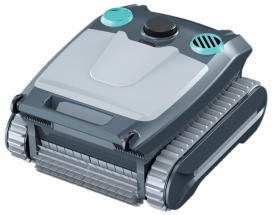
Core Physics Principles Enabling Underwater Operation
For a robotic pool cleaner to function autonomously beneath the surface, it must master a delicate balance of physics—beginning with buoyancy. Unlike a ship designed to float, these devices are engineered for controlled descent, achieving neutral buoyancy near the pool floor. This is accomplished through a hydrodynamic hull design that integrates precisely calculated ballast or water chambers, allowing the unit to displace a volume of water whose weight equals its own—neutralizing its tendency to rise or sink. The hull’s low-profile, sloped shape serves a functional purpose: it channels water flow downward during motion, generating hydrodynamic downforce that pins the cleaner against the pool surface for consistent brush contact. This principle is essential for wall climbing, where the combined effect of downward thrust and suction must overcome buoyant forces. The engineering mirrors naval architecture practices, where hull form is optimized to reduce drag and enhance propulsion—explaining why premium models glide with such efficiency.
Neutral Buoyancy and Hydrodynamic Hull Design
Submerged operation hinges on precise management of buoyant force—the upward push exerted by displaced water. Robotic pool cleaners counteract this by being slightly heavier than the water they displace, a state fine-tuned using internal ballast tanks or dense, non-corrosive weights. This ensures a gentle, impact-free descent to the pool floor, protecting both internal components and the pool surface. The hull’s geometry reflects applied fluid mechanics: a curved, low-drag profile minimizes frontal area, reducing energy demand during movement. As the robot advances, water flows over its shell, creating a subtle pressure differential that enhances traction—a benefit amplified in models with a dedicated bottom skirting. This integration of buoyancy control and hydrodynamics forms the silent foundation that prevents floating at the surface or leaving behind unsettled debris.
Underwater Traction: Wheels, Tracks, and Surface Adhesion Engineering
Once positioned on the floor, the challenge shifts to generating reliable traction on slick, often sloped surfaces coated with biofilm. Solutions go beyond simple rolling friction and involve mechanical grip and active adhesion. Wheeled models use wide, soft-rubber tires with deep, aggressive treads to maximize contact area and channel water away—similar to high-performance rain tires. Tracked systems deploy continuous belts that distribute weight across a larger surface area, preventing slippage on inclines and enabling obstacle clearance (e.g., main drains). Wall climbing, however, relies on an active adhesion system: a powerful impeller creates a partial vacuum between the robot’s underside and the pool surface. This suction—measured in high static pressure—clamps the unit to vertical walls, enabling gravity-defying movement independent of hydrodynamic downforce. Together, these strategies ensure motor power translates directly into purposeful motion—not wasted wheelspin.
Water Pressure Resistance and IP68-Sealed Housing Integrity
Reliable underwater operation demands resilience against constant hydrostatic pressure. The IP68 rating is the industry benchmark, certifying full protection against dust and continuous submersion at depths specified by the manufacturer. Achieving this requires a multi-layered sealing strategy—not just a single gasket. Critical components like the motor and control board reside in a pressure-resistant compartment, typically molded from high-impact ABS or polycarbonate and sealed with dual O-rings and silicone gaskets compressed by the surrounding water pressure. Thermal expansion is also addressed: as the motor heats up, internal air pressure rises, and a one-way waterproof vent—often using a Gore-Tex membrane—allows safe pressure equalization without permitting water ingress. This rigorous sealing safeguards sensitive electronics from immediate short-circuiting and long-term corrosion caused by chemically treated water, directly influencing service life and mean time between failures.
Intelligent Navigation Without GPS: Sensor Fusion and Dead Reckoning
Unlike terrestrial robots that rely on GPS, robotic pool cleaners operate in a signal-denied underwater environment. They achieve precise, systematic coverage through sensor fusion and dead reckoning—a computational method that estimates current position by integrating speed and heading data from a known starting point. This approach, foundational to Inertial Navigation Systems (INS), enables complete pool coverage without external references.
Gyroscope-Accelerometer Integration for 3D Orientation Tracking
At the heart of spatial awareness lies the Inertial Measurement Unit (IMU), combining a 3-axis gyroscope and accelerometer. The gyroscope tracks angular velocity to monitor changes in pitch, roll, and yaw; the accelerometer measures linear acceleration along all three axes. An onboard processor fuses this raw data via a robust sensor fusion algorithm—filtering out vibration noise from the pump motor—to deliver smooth, high-fidelity 3D pose estimation. This real-time orientation data is essential for dead reckoning: it ensures accurate floor-to-wall transitions, stable climbing angles, and upright navigation during turns—all without external landmarks.
Wall Detection, Cliff Sensors, and Adaptive Path Optimization
Dead reckoning is continuously refined by reactive environmental sensors. Mechanical bump sensors or ultrasonic transducers detect wall contact, triggering a pre-programmed turn—typically a precise 180-degree rotation enabled by gyroscope-derived heading data—to maintain parallel cleaning paths. Simultaneously, downward-facing infrared cliff sensors—positioned near the main brush—prevent ascent above the waterline or falls over steps. These physical interactions serve as corrective inputs to the dead reckoning model, adapting the cleaning path in real time to the pool’s unique geometry. This hybrid strategy—internal calculation paired with external feedback—ensures consistent, wall-to-wall coverage without missed zones or collisions.
Cleaning Performance: Suction, Filtration, and Debris Management
Vacuum-Driven Capture and Real-Time Suction Calibration
A robotic pool cleaner’s suction system generates negative pressure via a high-efficiency impeller, drawing water and suspended debris into an intake nozzle. Nozzle geometry is optimized to accelerate flow and capture particles as small as 2 microns—a capability validated in industry testing. Rather than running at fixed power, onboard sensors monitor water-flow resistance and motor current. When debris load spikes—such as after heavy leaf fall—the control algorithm instantly increases impeller speed to sustain capture force, then scales back during lighter loads to conserve energy. This dynamic calibration prevents clogging and ensures loosened debris is removed immediately—not redeposited elsewhere—achieving >98% debris-removal efficiency in controlled trials.
Multi-Stage Wet-Environment Filtration and Self-Cleaning Media
Downstream of the intake, a multi-stage filtration system separates debris from water. A primary cyclonic chamber uses centrifugal force to eject heavier contaminants like sand and leaves; a fine-mesh secondary filter captures microscopic particles responsible for cloudiness. Leading models feature self-cleaning media: a pressure sensor triggers a brief reverse-flow purge that dislodges trapped debris from the filter screen and flushes it into a containment basket. Paired with corrosion-resistant stainless-steel mesh, this system extends maintenance intervals to over 50 cleaning cycles—maintaining peak suction performance for months without manual intervention.
Power, Propulsion, and Wall-Climbing Capabilities in Robotic Pool Cleaners
Operational effectiveness depends on robust power delivery, efficient propulsion, and proven wall-climbing ability. High-torque motors—often commercial-grade—supply both the suction force needed to lift debris and the drive power required for movement across floors and up walls. For vertical ascent, cleaners use high-traction treads or textured wheels that grip wet, algae-coated surfaces, augmented by strong suction-based adhesion to prevent slippage. This enables targeted scrubbing of the waterline, where oils, sunscreen residue, and biofilm accumulate—a key differentiator from basic floor-only units. Propulsion is typically delivered by DC motors connected via a tangle-free swivel cable, ensuring uninterrupted corded power and eliminating runtime constraints. Low-voltage direct current—supplied through a safety-rated transformer—enhances user safety and supports extended cleaning cycles. Advanced models may employ dual motors—one dedicated to suction, another to drive—to optimize cleaning coverage, energy use, and long-term reliability. The synergy of motor strength, adaptive traction, and waterline scrubbing delivers comprehensive cleaning—from deep-end floor to tile line—making these robots indispensable for thorough, hands-off pool maintenance.
FAQ
Q: How do robotic pool cleaners achieve underwater movement without floating?
A: They utilize neutral buoyancy, achieved by internal ballast tanks or weights, combined with hydrodynamic hull designs that generate downward thrust, keeping them steady on the pool surface.
Q: What technology ensures robotic pool cleaners navigate without GPS?
A: They employ sensor fusion and dead reckoning, combining gyroscope, accelerometer, and environmental sensors to estimate position, ensure systematic coverage, and adapt paths dynamically in real-time.
Q: How do robotic pool cleaners climb walls?
A: They rely on a combination of high-traction wheels or tracks and active adhesion via powerful suction systems, which create partial vacuums to hold them firmly against vertical surfaces.
Q: How do they manage to clean debris efficiently without frequent clogging?
A: Advanced models feature smart suction calibration and multi-stage filtration systems, including self-cleaning capabilities, to handle variable debris loads and maintain consistent cleaning efficiency for extended periods.
Q: What ensures the longevity of robotic pool cleaners in harsh pool environments?
A: IP68-rated sealed housings, made from high-impact materials and protected by dual gaskets, ensure resistance against water pressure, chemical corrosion, and thermal expansion, safeguarding sensitive internal components.