EN
EN


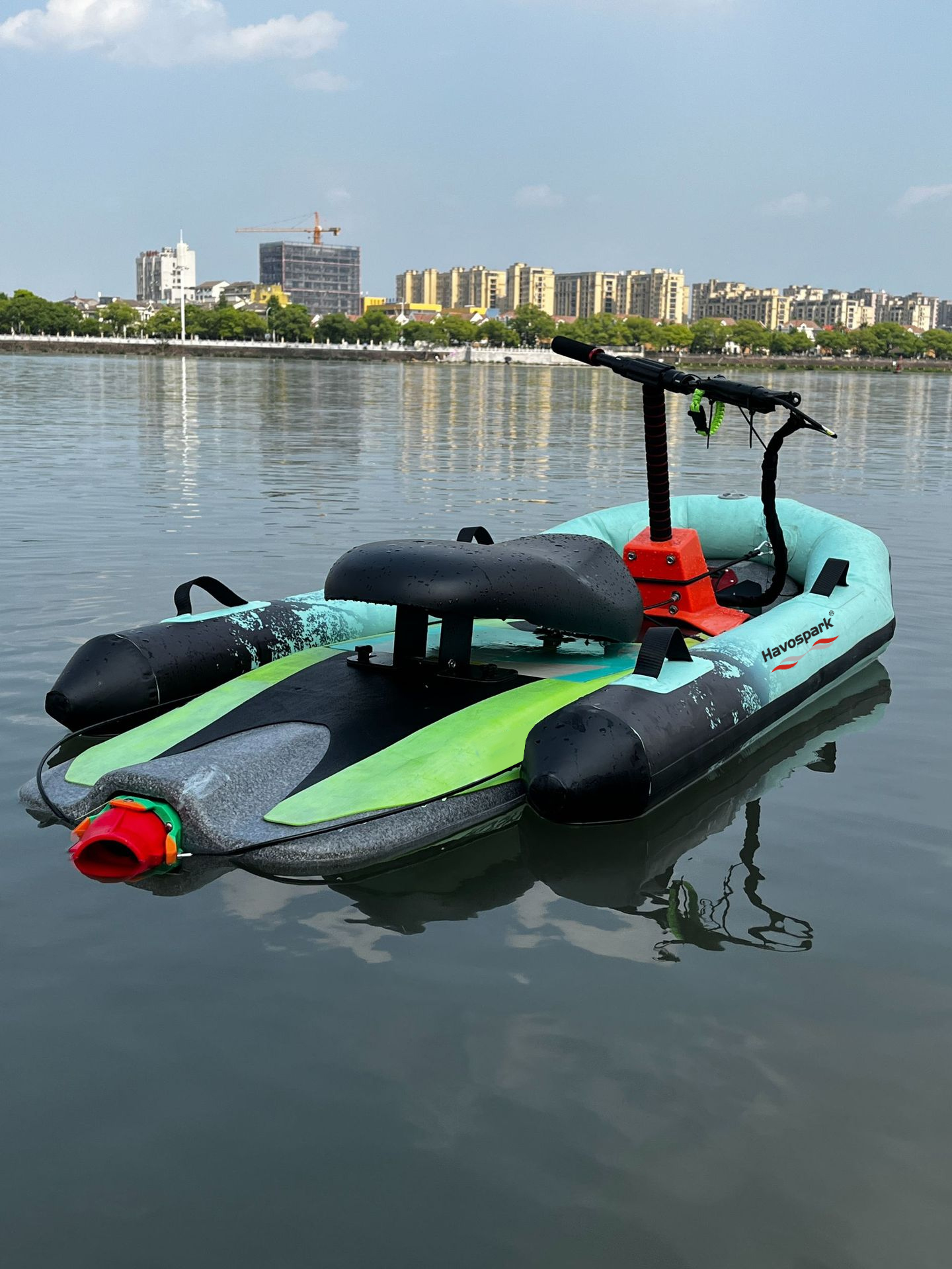
Why 70 km/h Defines the Premium Electric Surfboard Tier
The Physics of Surface Riding: How 70 km/h Balances Lift, Stability, and Control
Reaching 70 km/h triggers hydrodynamic planing—transitioning the board from displacement mode to skimming the water’s surface. This shift reduces submerged surface area by over 60%, drastically cutting drag while generating centrifugal forces that enhance dynamic stability during turns. Precision control is maintained through optimized fin geometry and intuitive rider weight distribution. Below this speed, boards plow inefficiently; above it, ventilation cavitation risks destabilizing thrust. Thus, 70 km/h represents the engineering sweet spot: peak efficiency, responsive handling, and sustained high-performance capability.
Market Differentiation: Why 20 kW + 70 km/h Separates Recreational from Pro-Grade Electric Surfboard Performance
The 20 kW power threshold is what enables sustained 70 km/h operation—establishing a definitive performance boundary. Recreational models (5–15 kW) top out at 40–55 km/h: adequate for calm-water cruising but insufficient for aggressive carving, wave-pumping, or aerial transitions. In contrast, pro-grade dual-motor systems deliver 20 kW with built-in redundancy, maintaining velocity through turbulence and tight turns. Critically, this output demands advanced liquid cooling—absent in budget platforms—signaling rigorous thermal design, structural integrity, and real-world reliability. The 20 kW/70 km/h benchmark isn’t arbitrary; it reflects the minimum engineering standard required for professional-level electric surfboard performance.
Propulsion Architecture: Dual-Motor Jet Systems Built for 20 kW Sustained Output
Jet Nozzle Design and Cavitation Management at High-Speed Electric Surfboard Operation
Sustaining 70 km/h demands jet nozzles engineered to maximize thrust while suppressing cavitation—the formation of vapor pockets that erode components and disrupt propulsion. Precision convergent-divergent profiles preserve laminar flow above 60 km/h; boundary layer injection disrupts bubble nucleation; and asymmetric vanes counteract torque-induced veering. Together, these features reduce efficiency losses by up to 22% versus conventional nozzles during prolonged high-speed runs—directly extending battery range and preserving acceleration consistency.
Synchronized Dual 10 kW Motors: Torque Vectoring, Thermal Redundancy, and Real-Time Load Balancing
Dual 10 kW motors operate in coordinated unison—not merely as parallel power sources, but as an integrated control system. Independent motor controllers enable distributed torque vectoring for precise turn initiation, phase-shifted PWM to eliminate harmonic resonance, and thermal load shedding that redistributes power within 50 milliseconds if overheating occurs. Integrated direct-water cooling channels dissipate 98% of stator waste heat, enabling continuous 20 kW output without derating. This architecture transforms raw power into predictable, fault-tolerant responsiveness—essential when riding at velocity extremes.
Battery & Thermal Systems: Powering 20 kW Without Compromise
High-Density Lithium Pack Design: C-Rate, Voltage Sag Mitigation, and Cycle Life at Peak Discharge
Delivering 20 kW sustainably requires lithium packs designed for extreme discharge conditions. Cells rated at ≥5C minimize voltage sag during acceleration surges, ensuring consistent thrust delivery. Advanced battery management systems (BMS) monitor impedance at the cell level, dynamically balancing loads to prevent thermal hotspots—a refinement shown in peer-reviewed research to extend cycle life by 40% under peak discharge conditions. Structural reinforcements further mitigate vibration-induced degradation during high-speed wave impacts, directly supporting long-term reliability in demanding use cases.
Active Liquid Cooling Integration for Battery and Motor Systems During Extended 70 km/h Runs
Extended 70 km/h operation places extraordinary thermal stress on both batteries and motors. Dual independent liquid-cooling loops address each system’s unique needs: microchannel cold plates extract heat from battery cells three times faster than passive solutions, while sealed glycol circuits safely dissipate up to 10 kW of motor waste heat without corrosion risk. Real-time thermal sensors trigger intelligent speed throttling only when temperatures approach critical thresholds (e.g., 60°C), preserving performance while preventing damage. The result is 30+ minutes of uninterrupted high-velocity riding—meeting the endurance expectations of professional riders and competitive environments.
FAQ
What makes 70 km/h the premium speed tier for electric surfboards?
Reaching 70 km/h allows the board to enter hydrodynamic planing, reducing drag and improving stability and control, making it the engineering sweet spot for performance.
Why is a 20 kW power threshold important?
The 20 kW threshold enables sustained 70 km/h operation, differentiating pro-grade models from recreational ones by supporting high-speed maneuvers and thermal management.
How do dual-motor systems enhance performance?
Dual-motor systems provide distributed torque vectoring, thermal redundancy, and real-time load balancing, necessary for high-speed precision and reliability.