EN
EN


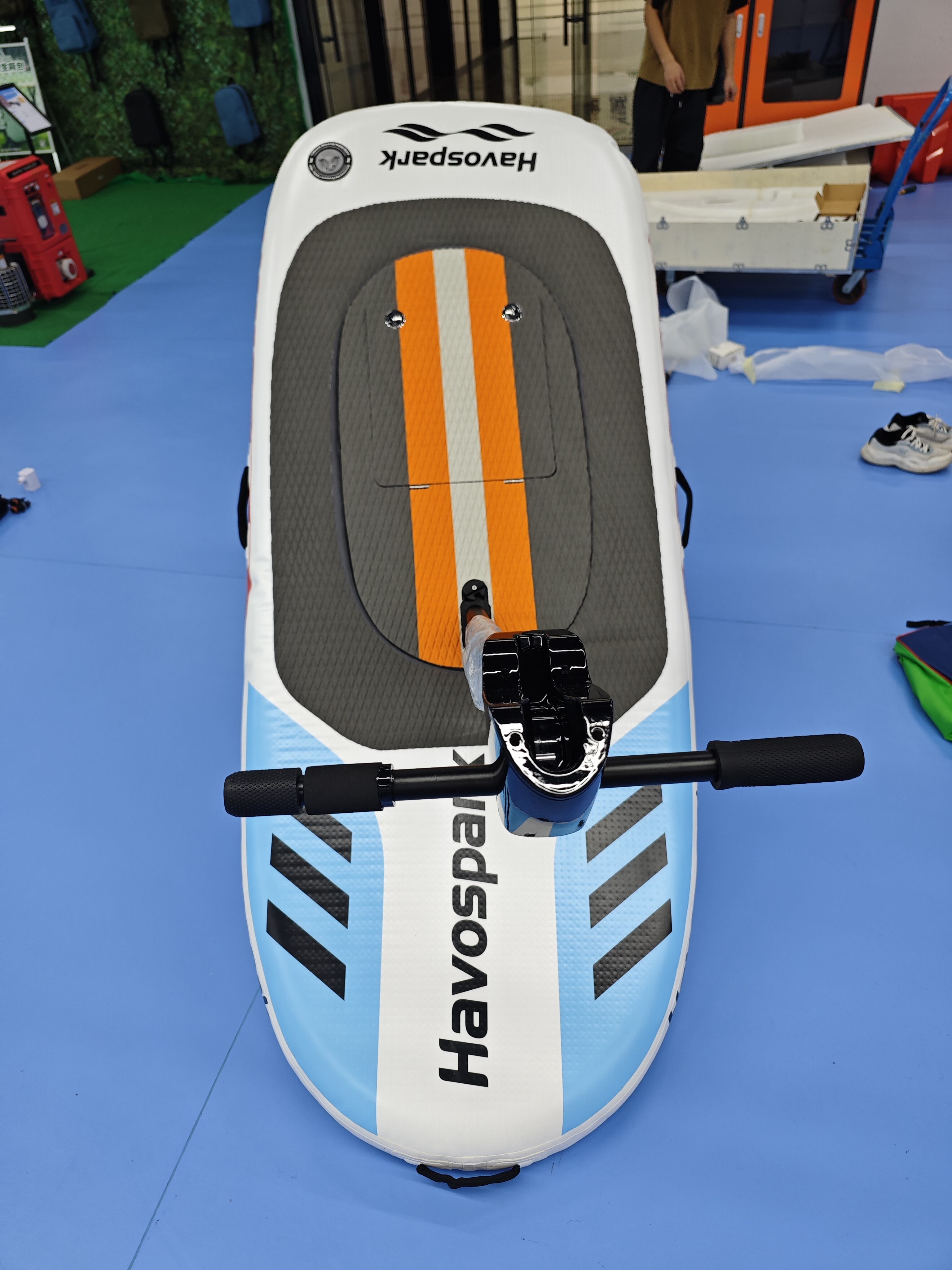
Carbon Fiber: The Premium Choice for High-Performance Efoil Hydrofoils
Why Carbon Fiber Dominates Racing and Premium Efoil Designs
Carbon fiber’s exceptional strength-to-weight ratio makes it the definitive material for high-performance efoil hydrofoils. It delivers up to five times the stiffness of aluminum at roughly half the weight—directly enabling faster acceleration, tighter carving, and lower hydrodynamic drag. In racing applications, this rigidity under extreme load is non-negotiable: it preserves foil geometry during high-speed maneuvers and minimizes energy loss through flex. Equally important, carbon fiber resists fatigue and saltwater corrosion, ensuring consistent performance and longevity across seasons—even with frequent ocean use.
Monoblock Construction and Structural Integrity in Efoil Wings
Top-tier efoil wings use monoblock construction: a single, continuous carbon fiber layup molded into one seamless unit. This eliminates structural compromises inherent in bonded or bolted assemblies—particularly at critical junctions like wing-to-fuselage interfaces. Stress distributes evenly across the monolithic structure, drastically lowering the risk of delamination or sudden failure during aggressive turns or impact loading. Aerodynamically, the uninterrupted surface reduces turbulence and vortex shedding, improving lift efficiency and stability. Though more complex and costly to produce, the reliability, precision, and long-term performance gains make monoblock carbon the standard for competitive and premium efoils.
Aluminum and Fiberglass: Cost-Effective, Corrosion-Resistant Alternatives for Entry-Level Efoils
For beginners and value-focused riders, aluminum and fiberglass offer proven, accessible pathways into efoiling—delivering solid performance, marine durability, and straightforward maintenance without carbon’s premium price tag.
Modular Aluminum Hydrofoils: Balancing Durability, Weight, and Serviceability
Aluminum hydrofoils strike a pragmatic balance for learners and casual users. They’re highly durable, impact-tolerant, and significantly easier to repair than carbon or fiberglass—bent masts or dinged wings can often be straightened or replaced individually. Their modular design enhances serviceability: riders swap damaged components instead of retiring entire assemblies, extending system life and reducing long-term cost of ownership. While denser than fiberglass (adding ~50% mass relative to equivalent parts), this extra weight rarely impedes learning or relaxed riding. Marine-grade anodizing or powder coating provides robust protection against saltwater corrosion, supporting multi-season reliability with routine rinsing and basic care.
Fiberglass Reinforcement and Marine-Grade Coatings for Long-Term Saltwater Use
Fiberglass presents a lighter, corrosion-proof alternative to aluminum—typically weighing 30–40% less while matching its resistance to saltwater degradation. Its stiffness-to-weight ratio bridges the gap between aluminum’s toughness and carbon’s performance, making it ideal for entry-level wings and masts. To offset inherent brittleness, manufacturers reinforce high-stress zones with additional laminate layers or integrate polymer cores for impact resilience. Crucially, marine-grade gel coats and waterproof epoxy seals prevent water ingress and UV-induced resin breakdown—essential safeguards, as untreated fiberglass can absorb moisture over time, compromising structural integrity. With proper finishing, fiberglass efoil components deliver smooth, predictable ride dynamics and minimal upkeep: a thorough freshwater rinse after each session is usually all that’s required.
Core Materials, Resins, and Thermal Integration: Enabling Safe, Efficient Efoil Operation
Beyond surface materials, internal engineering determines how safely and effectively an efoil handles power, heat, and hydrodynamic forces. Closed-cell foam cores and purpose-engineered resins work in concert to optimize stiffness, buoyancy, thermal management, and battery safety.
Closed-Cell Foam Cores (PVC/PET) for Wing Stiffness and Buoyancy Control
Efoil wings rely on closed-cell foam cores—most commonly PVC or PET—to achieve targeted stiffness without excess mass. These foams act as rigid internal scaffolds, preventing unwanted flex under high-lift conditions while contributing controlled positive buoyancy to keep the board afloat at rest. Their impermeable cell structure blocks water absorption, ensuring dimensional stability and long-term performance—even after repeated saltwater submersion. By adjusting foam density and placement, designers fine-tune flex patterns: stiffer cores support aggressive, responsive carving; slightly more compliant variants enhance glide efficiency and comfort during cruising.
Flame-Retardant Epoxy Resins and Thermally Conductive Polymers for Battery-Safe Efoil Masts
Because the mast houses the battery pack and power electronics, thermal safety is foundational—not optional. Modern efoil masts integrate flame-retardant epoxy resins formulated to self-extinguish upon localized overheating, significantly slowing thermal runaway propagation in rare cell-failure scenarios. Complementing this, thermally conductive polymers are strategically embedded within the mast’s composite structure to draw heat away from the battery and transfer it efficiently into the surrounding water. This dual-material strategy—fire resistance plus active heat dissipation—allows higher power delivery and sustained throttle use while preserving mechanical strength and rider safety. It reflects a mature, standards-informed approach to efoil engineering, grounded in real-world operational demands.
FAQ
What makes carbon fiber superior for efoil hydrofoils?
Carbon fiber is lightweight yet incredibly stiff, allowing for faster acceleration, sharper turns, and reduced drag. It also resists fatigue and saltwater corrosion, ensuring long-term durability.
Why is monoblock construction important for efoil wings?
Monoblock construction ensures uninterrupted stress distribution, reducing risks of delamination and improving reliability, lift efficiency, and stability.
Are aluminum hydrofoils suitable for beginners?
Yes, aluminum hydrofoils are durable, impact-resistant, and affordable, making them an appropriate choice for entry-level users.
What are the advantages of fiberglass in efoil components?
Fiberglass is lighter than aluminum and corrosion-resistant. With proper reinforcement and finishing, it provides predictable performance and minimal maintenance needs.
Why are closed-cell foam cores used in efoil wings?
Closed-cell foam cores enhance stiffness and buoyancy while ensuring the wing remains dimensionally stable over time and resists water absorption.
How are efoil masts designed to ensure battery safety?
Modern efoil masts incorporate flame-retardant epoxy resins and thermally conductive polymers to dissipate heat efficiently and prevent thermal runaway in rare scenarios.
Table of Contents
- Carbon Fiber: The Premium Choice for High-Performance Efoil Hydrofoils
- Aluminum and Fiberglass: Cost-Effective, Corrosion-Resistant Alternatives for Entry-Level Efoils
- Core Materials, Resins, and Thermal Integration: Enabling Safe, Efficient Efoil Operation
-
FAQ
- What makes carbon fiber superior for efoil hydrofoils?
- Why is monoblock construction important for efoil wings?
- Are aluminum hydrofoils suitable for beginners?
- What are the advantages of fiberglass in efoil components?
- Why are closed-cell foam cores used in efoil wings?
- How are efoil masts designed to ensure battery safety?