EN
EN


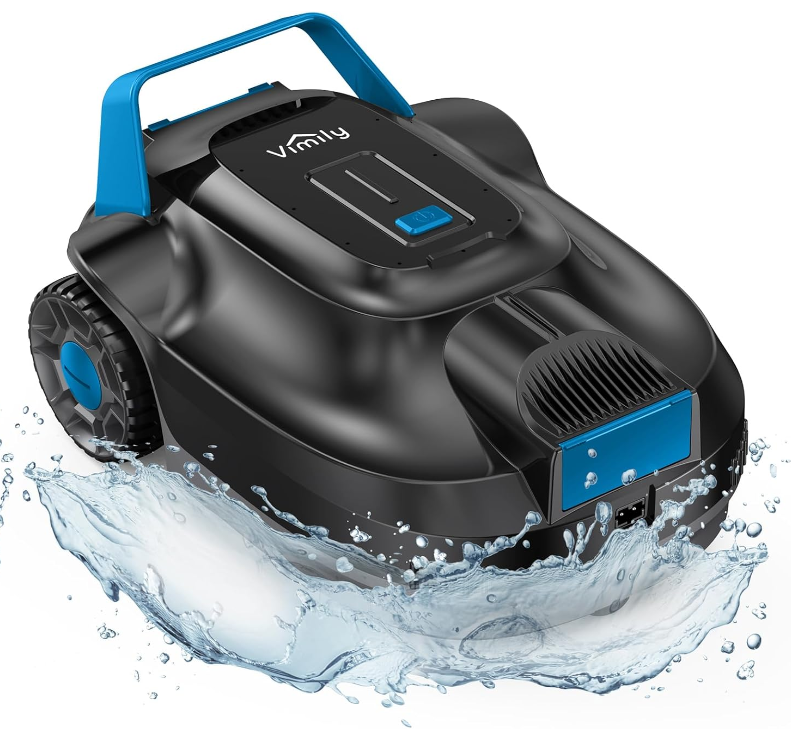
How Solar Pool Robots Achieve Autonomous, Energy-Autonomous Cleaning
Integrated Photovoltaic Systems and Hybrid Battery Management for All-Weather Operation
Solar pool robots integrate high-efficiency photovoltaic cells directly into their housing or pair with a dedicated solar charging station. These cells convert sunlight into electricity to power drive motors and scrubbers while simultaneously charging an onboard lithium-ion battery. A hybrid battery management system—often combining a high-capacity lithium pack with a supercapacitor bank—handles instantaneous power surges during wall-climbing and intensive brushing. This design extends battery lifespan and maintains consistent performance despite intermittent sunlight. Smart charge controllers regulate current flow to prevent overcharging and support deep-cycle operation, enabling the robot to store sufficient energy on sunny days to run through cloudy periods or at night. Some models include a small auxiliary battery to ensure uninterrupted operation in all-weather conditions. By operating independently of the electrical grid, solar pool robots eliminate energy costs and deliver truly off-grid, sustainable pool maintenance.
Intelligent Navigation Algorithms Optimized for Solar-Powered Runtime Constraints
Because every watt-hour is precious in a solar-powered cleaner, navigation algorithms are tightly optimized for energy efficiency. Modern units use 3D simultaneous localization and mapping (SLAM) to build precise real-time maps of the pool floor, walls, and steps. An onboard processor then calculates an optimal cleaning path—minimizing overlap, avoiding redundant passes, and prioritizing high-traffic or debris-prone zones based on remaining charge and pool geometry. Energy-aware routing dynamically adjusts suction power or motor speed when solar input dips, extending runtime without compromising coverage. Over successive sessions, the robot learns the pool’s unique shape and typical debris patterns, achieving up to 30% faster cleaning than random-movement bots. This intelligent orchestration ensures thorough, autonomous cleaning across each solar-charging cycle—no manual scheduling required.
Marine-Grade Stainless Steel Drivetrains and UV-Stabilized Polymer Housings
Solar pool robots operate continuously in harsh environments: chlorinated water, fluctuating pH, and intense UV exposure. To withstand these conditions, drivetrains use marine-grade stainless steel—resistant to pitting and crevice corrosion—to preserve gear alignment and mechanical efficiency over thousands of cycles. The housing relies on UV-stabilized polymer compounds formulated with light absorbers and hindered amine stabilizers that inhibit photo-oxidative degradation. This prevents embrittlement, cracking, and yellowing common in standard plastics, ensuring long-term impact resistance and aesthetic integrity. Together, these materials support reliable outdoor autonomy—balancing rugged durability with the lightweight construction essential for energy-efficient movement and climbing.
Tile, Vinyl, and Concrete Compatibility: How Solar Pool Robot Design Balances Mobility and Debris Capture
A solar pool robot must adapt its cleaning mechanics to diverse pool surfaces without sacrificing effectiveness or safety. On smooth tile, stiff PVC brushes effectively remove algae and calcium deposits without scratching. For delicate vinyl liners, softer, non-abrasive brushes and reduced downward pressure prevent tears. On rougher concrete or plaster, aggressive bristles and higher-torque motors break up stubborn grime. Mobility and debris capture are balanced through rubber tracks or oversized, deeply treaded wheels that grip both slick tile and porous concrete. Meanwhile, precisely tuned suction intake height ensures optimal particle capture—even as brush speed and bypass flow adjust dynamically to surface resistance. This adaptive approach allows low-voltage motors to allocate power efficiently, preventing stalling on steep slopes while still lifting leaves, sand, and fine sediment. Thoughtful weight distribution keeps the robot grounded on inclines without damaging soft vinyl surfaces—and tailored navigation patterns maximize coverage within strict solar-powered energy limits.
Nano-Coated Filter Cartridges and Microplastic Retention Rates in Low-Power Operation
To maintain filtration efficacy during low-power operation—when suction force naturally declines—solar pool robots rely on nano-coated filter cartridges. These coatings create a micro-textured surface that enhances particle adhesion, capturing microplastics and silt as small as 50 microns. Unlike conventional filters, nano-coated variants retain over 90% of microplastics in a single pass, even under intermittent solar input, preventing re-suspension into the pool. Their low pressure drop further conserves pump energy, extending cleaning cycles. Given growing concerns about microplastic accumulation in residential pools, this level of retention is critical for water clarity and health. Importantly, the coating’s durability sustains performance across hundreds of cleaning cycles—reducing maintenance frequency and reinforcing long-term reliability.
FAQ Section
How do solar pool robots store energy for nighttime operation?
Solar pool robots use high-efficiency photovoltaic cells paired with a hybrid battery management system to store energy during sunny periods. This stored energy allows them to continue operating through cloudy weather or at night.
How does intelligent navigation improve cleaning efficiency?
Intelligent navigation algorithms, such as SLAM, create real-time maps of the pool, optimizing cleaning paths to reduce overlap and prioritize debris-prone areas, ensuring efficient energy use.
Are solar pool robots suitable for all pool types?
Yes, solar pool robots are designed to adapt their cleaning mechanics to various surfaces, including tile, vinyl, and concrete, ensuring effective and safe cleaning for all pool types.
Do solar pool robots collect microplastics?
Yes, solar pool robots equipped with nano-coated filter cartridges can capture microplastics and particles as small as 50 microns, ensuring effective filtration during low-power operation.
Table of Contents
-
How Solar Pool Robots Achieve Autonomous, Energy-Autonomous Cleaning
- Integrated Photovoltaic Systems and Hybrid Battery Management for All-Weather Operation
- Intelligent Navigation Algorithms Optimized for Solar-Powered Runtime Constraints
- Marine-Grade Stainless Steel Drivetrains and UV-Stabilized Polymer Housings
- Tile, Vinyl, and Concrete Compatibility: How Solar Pool Robot Design Balances Mobility and Debris Capture
- Nano-Coated Filter Cartridges and Microplastic Retention Rates in Low-Power Operation
- FAQ Section